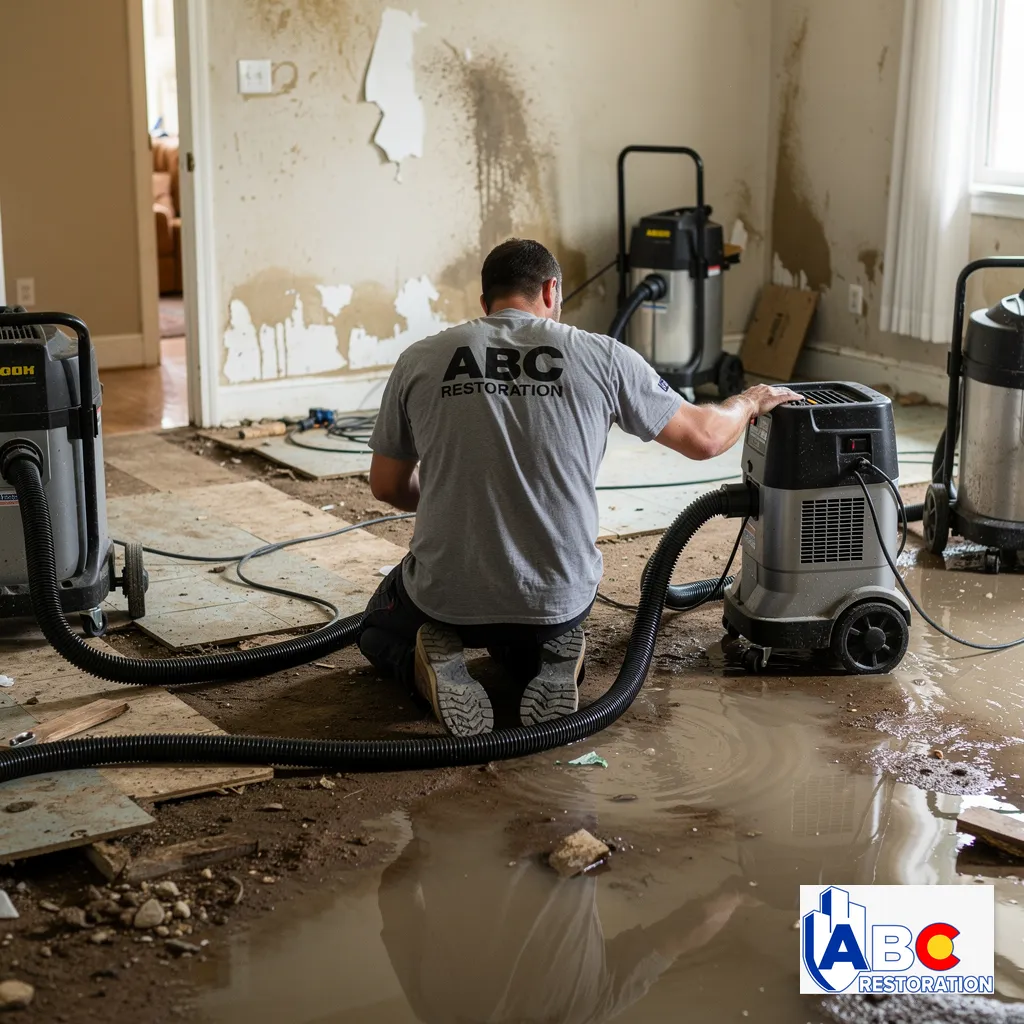
When water strikes your home, the immediate panic often centers on the visible mess, but the true threat lies in the invisible moisture that begins to compromise your home’s structural integrity the moment it touches your floors. Seeking professional water damage repair colorado springs is the most critical step a homeowner can take to ensure that their property is not just superficially dry, but scientifically stable and safe for habitation. In our unique high-altitude climate, water behaves differently than it does at sea level, requiring a deep understanding of psychrometry and specialized equipment to force moisture out of dense building materials. Certified experts utilize a combination of thermal imaging, high-capacity dehumidification, and EPA-approved antimicrobials to ensure that your recovery process is thorough, preventing the long-term nightmares of structural rot and hidden mold colonies that often follow a DIY cleanup attempt.
Navigating a flood or a burst pipe in the Pikes Peak region requires more than just a shop-vac and a few household fans. Because our local air is naturally thin and dry, it can create a deceptive sense of security where surfaces feel dry to the touch while the subflooring and wall cavities remain dangerously saturated. A certified restoration company brings a level of precision to the job that ensures every hidden pocket of moisture is identified and removed, protecting your family’s health and your home’s long-term resale value.
Why should you hire a professional for water damage repair?
Many property owners wonder if they can handle a leak on their own, but the complexity of water damage repair in Colorado Springs usually makes professional intervention a necessity for safety and insurance compliance. Certified contractors are trained to categorize the water source, distinguishing between clean water from a supply line and contaminated “black water” from a sewer backup or storm surge. This classification dictates the entire cleaning protocol, as porous materials like carpet padding and insulation must be handled with specific biohazard precautions if the water is deemed unsanitary.
Furthermore, certified restoration contractors Colorado Springs follow the IICRC S500 standards, which provide a rigorous framework for professional water damage restoration. These standards ensure that the drying process is monitored daily with calibrated moisture meters, ensuring that the structure reaches its “dry standard” before the equipment is removed. Without this professional verification, you run the risk of “secondary damage,” where trapped humidity causes previously dry areas of your home to develop mold or structural swelling weeks after the initial incident.
If you are currently facing an emergency and need to contact a team that can deploy industrial-grade tools immediately, doing so will likely save you thousands of dollars in reconstruction costs. The goal of professional drying is to preserve as much of the original structure as possible, and the faster the extraction begins, the more likely it is that expensive items like hardwood floors and custom cabinetry can be saved and restored to their pre-loss condition.
The Science Behind Professional Drying Equipment
A key differentiator for certified companies is their access to professional drying equipment that far exceeds the power of retail-grade machines. Industrial LGR (Low Grain Refrigerant) dehumidifiers are designed to pull moisture out of the air even when the humidity levels are already low, which is essential in our semi-arid Colorado climate. These machines create a “vapor pressure differential” that physically pulls water molecules from deep inside wooden studs and masonry, a process that household fans simply cannot initiate.
In addition to dehumidification, high-velocity air movers are strategically placed to create a “vortex” of air across wet surfaces. This constant movement breaks the boundary layer of saturated air sitting on top of wet materials, encouraging rapid evaporation. When combined with HEPA-filtered air scrubbers, this equipment not only dries the home but also cleans the air of dust, debris, and dormant mold spores that are often kicked up during the restoration process, ensuring the indoor air quality remains safe for your family.
Specialized tools like “Injectidry” systems are also used to target hard-to-reach areas. These systems use small tubes to pump dry air directly into wall cavities or under kitchen cabinets without the need for large-scale demolition. By using these surgical drying techniques, certified professionals can often dry out a kitchen or bathroom in a fraction of the time it would take to tear everything out and rebuild, significantly reducing the overall disruption to your daily life.
Understanding Water Damage Repair Standards and Safety
The industry adheres to strict water damage repair standards to ensure that every project is handled with a focus on occupant safety and structural longevity. This includes a thorough assessment of the “Category” and “Class” of the water damage. The Category refers to the cleanliness of the water source, while the Class refers to the rate of evaporation based on the types of materials involved. A basement with wet concrete and open air has a different Class than a room filled with saturated books, carpets, and upholstered furniture.
Safety protocols also involve the use of EPA-registered antimicrobials. These solutions are applied to materials that have been touched by water to inhibit the growth of bacteria and fungi. In a high-altitude environment like Colorado Springs, where many residents suffer from dry sinuses or respiratory sensitivities, ensuring that the home is chemically and biologically clean after a flood is a top priority. Professionals use “ULV” (Ultra-Low Volume) foggers to ensure these treatments reach every nook and cranny of the affected area.
Documentation is another pillar of the professional standard. Throughout the drying process, technicians record daily moisture readings on a “moisture map.” This data provides a clear picture of the drying progress and serves as proof for your insurance company that the mitigation was handled correctly. This documentation is vital for your claim’s approval and serves as a permanent record for your home’s history, showing that any previous water issues were fully and professionally resolved.
| Service Feature | Certified Professional | DIY / Uncertified |
| Moisture Detection | Infrared & Moisture Probes | Visual / Touch Only |
| Extraction Power | Truck-Mounted Vacuums | Shop-Vac / Mops |
| Dehumidification | Industrial LGR Units | Standard Household Fans |
| Sanitization | EPA-Approved Antimicrobials | Bleach / Store Cleaners |
| Monitoring | Daily Data Logging | Guesswork |
| Insurance Support | Standardized Billing (Xactimate) | Manual Invoices |
Why Colorado Springs Homeowners Choose Certified Experts
Living in the shadow of Pikes Peak means dealing with rapid weather changes that can catch any homeowner off guard. Certified restoration contractors Colorado Springs understand the local architecture, from the ranch-style homes in Briargate to the historic Victorians in the downtown area. They know where moisture tends to hide in these specific structures and have the local knowledge to navigate El Paso County’s unique building and safety codes during the reconstruction phase.
Speed is the ultimate factor in a successful restoration. A local, certified team can be at your door within the “golden hour” of a water emergency. By extracting standing water before it has the chance to wick high into the drywall, they can limit the scope of the damage. This rapid response is what prevents a simple pipe leak from turning into a full-blown mold remediation project, which is much more expensive and time-consuming.
Furthermore, certified companies have established relationships with local insurance adjusters. They speak the language of “mitigation” and “restoration,” ensuring that your claim is processed without unnecessary delays. By providing the exact data and photos the insurance company needs, a professional team takes the administrative burden off your shoulders, allowing you to focus on your family while they handle the technical and financial details of the recovery.
The Importance of Thermal Imaging in Water Detection
One of the most powerful tools in a professional’s arsenal is the infrared or thermal imaging camera. Water changes the temperature of the materials it saturates, and a thermal camera can “see” these temperature differences through walls and under floors. This allows a technician to find a hidden leak behind a shower wall or a damp spot in the ceiling that hasn’t yet turned into a visible stain.
Finding these hidden “hot spots” is crucial because trapped moisture is the primary cause of structural rot and mold. If a homeowner only dries what they can see, the water trapped inside the wall will continue to degrade the wooden studs and insulation. Thermal imaging ensures that the drying equipment is placed exactly where it is needed most, maximizing efficiency and ensuring that no part of the home is left vulnerable to future decay.
Once the drying process is underway, thermal cameras are used again to verify progress. As the materials dry, their thermal signature changes. By comparing images from day one to day four, the restoration team can visually confirm that the moisture is leaving the structure. This visual evidence, combined with physical moisture probe readings, provides a double layer of verification that your home is truly returning to a safe and dry state.
Navigating the Challenges of High-Altitude Drying
As mentioned, the altitude of Colorado Springs plays a significant role in how homes are dried. At 6,035 feet, the air pressure is lower, which means water evaporates at a slightly different rate than it does at sea level. However, the air also has a lower “density,” meaning it can reach its saturation point faster. This requires a higher volume of air movement and more precise dehumidification control to keep the drying process moving forward.
Professional technicians are trained to calculate the “Grains Per Pound” (GPP) of the air. This is a measure of the actual weight of water vapor in the air, rather than just the relative humidity percentage. By tracking GPP, the team can determine if the dehumidifiers are effectively pulling moisture out of the materials or if the air has become “stalled.” This scientific approach is the only way to ensure a fast and complete dryness in the Front Range’s unique atmospheric conditions.
Additionally, our cold winter temperatures can make drying a challenge. If a house is cold, the water molecules are less energetic and harder to evaporate. Professionals bring in portable, indirect-fired heaters to raise the temperature of the affected area to the “sweet spot” for evaporation. This energy boost is often the secret to drying a basement in three days instead of ten, preventing the prolonged disruption of having loud fans in your home for over a week.
Frequently Asked Questions About Certified Drying
What does “IICRC Certified” actually mean?
The IICRC (Institute of Inspection, Cleaning and Restoration Certification) is the non-profit body that sets the global standards for the restoration industry. A firm with this certification has committed to ongoing education and follows the most current scientific methods for water, fire, and mold restoration.
Can I just use my own carpet cleaner to suck up the water?
Household carpet cleaners are designed for surface cleaning, not deep extraction. They lack the “lift” and “CFM” (Cubic Feet per Minute) required to pull water out of the carpet padding and the subfloor below it. Professional truck-mounted units are hundreds of times more powerful.
Is it safe to stay in the house while the equipment is running?
In most cases, yes, provided the water was from a clean source (Category 1). However, the equipment is loud and can make the house very warm. If the water was contaminated (Category 3), it is usually recommended that you stay elsewhere until the sanitization phase is complete.
How do I know if the drying is truly finished?
A certified professional will provide a “Certificate of Completion” or a “Dry Log.” This document shows the moisture readings from the start of the project to the end, proving that all materials have reached their target dry standard according to moisture meter data.
Will the insurance company pay for the drying equipment?
If the water damage was caused by a sudden and accidental event (like a burst pipe), the cost of professional mitigation is typically a covered expense. Certified companies work directly with your insurance to ensure the “scope of work” is approved and paid for correctly.
Restoring Your Peace of Mind with Professional Care
A water disaster is more than just a physical mess; it is a disruption to your sense of security and a threat to your home’s future. By choosing to work with certified experts, you are choosing a path of scientific precision, safety, and transparency. From the first thermal image to the final moisture reading, every step of the professional process is designed to protect your investment and ensure that your home remains a healthy place for your family to live.
At ABC Restoration, we take pride in being the most trusted water damage repair Colorado springs specialists. Our team of highly trained and certified professionals is available 24/7 to respond to your emergency with the latest technology and a commitment to excellence. We don’t just dry floors; we restore homes and peace of mind using the highest industry standards and a deep understanding of our local Colorado climate. If you are facing a water crisis, don’t settle for “good enough”, contact us today and let our certified team ensure your home is dried safely, thoroughly, and professionally.